
Abu Dhabi free zone
KEZAD: Industrial Land at a Scale Nowhere Else Offers
The short answer
KEZAD Group is the economic-zones arm of AD Ports Group, operating twelve economic zones across Abu Dhabi, Al Ain, and Al Dhafra, formed by integrating the former KIZAD industrial zone with ZonesCorp. It offers both free-zone and domestic licensing, so an industrial occupier can choose the regime rather than the location. Its maritime gateway is the deep-water Khalifa Port, it sits between Abu Dhabi and Dubai, and facilities run from serviced land plots and pre-built warehouses to build-to-suit units, offices, and large-scale worker accommodation.
KEZAD is where the UAE puts industry that needs room. The scale is the argument: twelve zones, deep-water port access, and land in quantities that Dubai's zones cannot match at comparable cost.
It also does something most free zones do not, which is offer a domestic licence alongside the free-zone one. For a manufacturer whose customers are inside the UAE, that option is often worth more than any tax framing.
At a glance
- Indicative cost
- Priced within your setup plan — every component itemised.
This is for you if
- You manufacture, process, or assemble and need real industrial land.
- Your freight is containerised and port proximity matters.
- You need to house a workforce near the operation.
- You want the choice between free-zone and domestic licensing.
This may not be the right route if
- You are a desk-based consultancy with no physical operation.
- Your team and clients are in central Dubai.
- You need a financial-services regulator or a common-law framework.
- You want a small licence with minimal commitment.
At a glance
- Indicative cost
- Priced within your setup plan — every component itemised.
Prefer to start in writing? Send the details through the contact form.
Start with a structure assessment
In an initial consultation you receive a plain-language decision summary, a document-preparation list, and the next actions for your situation. Current figures are confirmed within your adviser-reviewed route comparison.
KEZAD in detail
Free zone or domestic — the decision most occupiers get backwards
KEZAD offers both free-zone and domestic economic zones. That is unusual and it matters, because the two regimes suit genuinely different customer bases. Free-zone licensing suits re-exporters, wholesale distributors, warehousing operations, and industrial projects aimed at markets outside the GCC. Domestic licensing suits manufacturers selling into the UAE market itself.
The instinct is to assume the free zone is automatically better. For an operation whose customers are UAE-based, it often is not: selling from a free zone into the mainland market can require additional arrangements, and the domestic option removes that friction entirely. Decide from where your revenue comes, not from which label sounds more advantageous.
KEZAD's two licensing regimes and who each is built for.
Free zone
- Suits
- Re-export, distribution, warehousing, non-GCC-facing industry
- Main consideration
- Selling into the UAE market may need extra arrangements
Domestic
- Suits
- Manufacturers and suppliers selling into the UAE market
- Main consideration
- Standard onshore rules apply to the entity
| Regime | Suits | Main consideration |
|---|---|---|
| Free zone | Re-export, distribution, warehousing, non-GCC-facing industry | Selling into the UAE market may need extra arrangements |
| Domestic | Manufacturers and suppliers selling into the UAE market | Standard onshore rules apply to the entity |
What Designated Zone status does and does not do
Industrial free zones are often sold on being outside the UAE for VAT. The accurate version is narrower. A Designated Zone is a fenced area with monitored entry and exit and controls over the storage and handling of goods, and it is treated as outside the UAE for VAT on goods, under conditions, not for everything.
The Federal Tax Authority's position, following the amendment to Article 51 that took effect on 30 October 2021, is that a supply of goods in a Designated Zone can be outside the scope of tax where the goods are not consumed inside the country, or where evidence shows they were delivered outside the UAE or that VAT was paid on import from the zone. Shipping and delivery services connected to those goods can follow the same treatment under conditions, including that the supplier is a non-resident not registered for UAE VAT.
Services are the part people get wrong. The Designated Zone concept is built around goods; services generally do not get the same treatment simply by being performed inside the fence. Zone designation also changes over time, so status should be confirmed against the current Federal Tax Authority list for your specific site rather than assumed from a brochure.
Scale, port, and accommodation
KEZAD's zones sit between Abu Dhabi and Dubai with the deep-water Khalifa Port as the maritime gateway, which is the reason containerised operations look here first. Facilities run across four formats: serviced land plots, pre-built warehouses and light industrial units, build-to-suit space for occupiers with specific requirements, and offices with shared workstations for the administrative side.
Worker accommodation is part of the offer rather than a problem to solve separately — a legacy of the ZonesCorp integration, with Sdeira Group operating employee accommodation across more than forty communities in Abu Dhabi, Al Ain, and Al Dhafra. For a labour-intensive operation this is frequently the deciding factor, because housing a workforce near the site is otherwise one of the hardest parts of an industrial move.
Before you commit
What to verify at KEZAD specifically
Checks particular to an industrial zone group. The generic free-zone questions are covered in the setup-process guide linked below.
The KEZAD-specific checks worth completing before any payment is made.
Free zone or domestic
- Why it matters here
- Both exist and suit different customer bases
- How it is settled
- Decide from where your revenue comes, in writing
Which zone
- Why it matters here
- Twelve zones across three regions
- How it is settled
- Match the site to freight route and workforce
Designated Zone status
- Why it matters here
- It applies to goods, not services, and changes
- How it is settled
- Confirm current status for your site with the FTA
Facility format
- Why it matters here
- Land, pre-built, build-to-suit, and offices differ hugely
- How it is settled
- Scope the format against the actual process
Worker accommodation
- Why it matters here
- Housing is often the real constraint
- How it is settled
- Confirm availability and cost near your site
Industrial approvals
- Why it matters here
- Environmental and industrial consents may apply
- How it is settled
- Identify every consent before signing for land
| Check | Why it matters here | How it is settled |
|---|---|---|
| Free zone or domestic | Both exist and suit different customer bases | Decide from where your revenue comes, in writing |
| Which zone | Twelve zones across three regions | Match the site to freight route and workforce |
| Designated Zone status | It applies to goods, not services, and changes | Confirm current status for your site with the FTA |
| Facility format | Land, pre-built, build-to-suit, and offices differ hugely | Scope the format against the actual process |
| Worker accommodation | Housing is often the real constraint | Confirm availability and cost near your site |
| Industrial approvals | Environmental and industrial consents may apply | Identify every consent before signing for land |
How setup works
The process is the same wherever you incorporate
Structure options, what an engagement covers, and the stages a licence goes through are common to every free zone. They are set out once, in full, rather than repeated on each zone page.
Read the free-zone setup process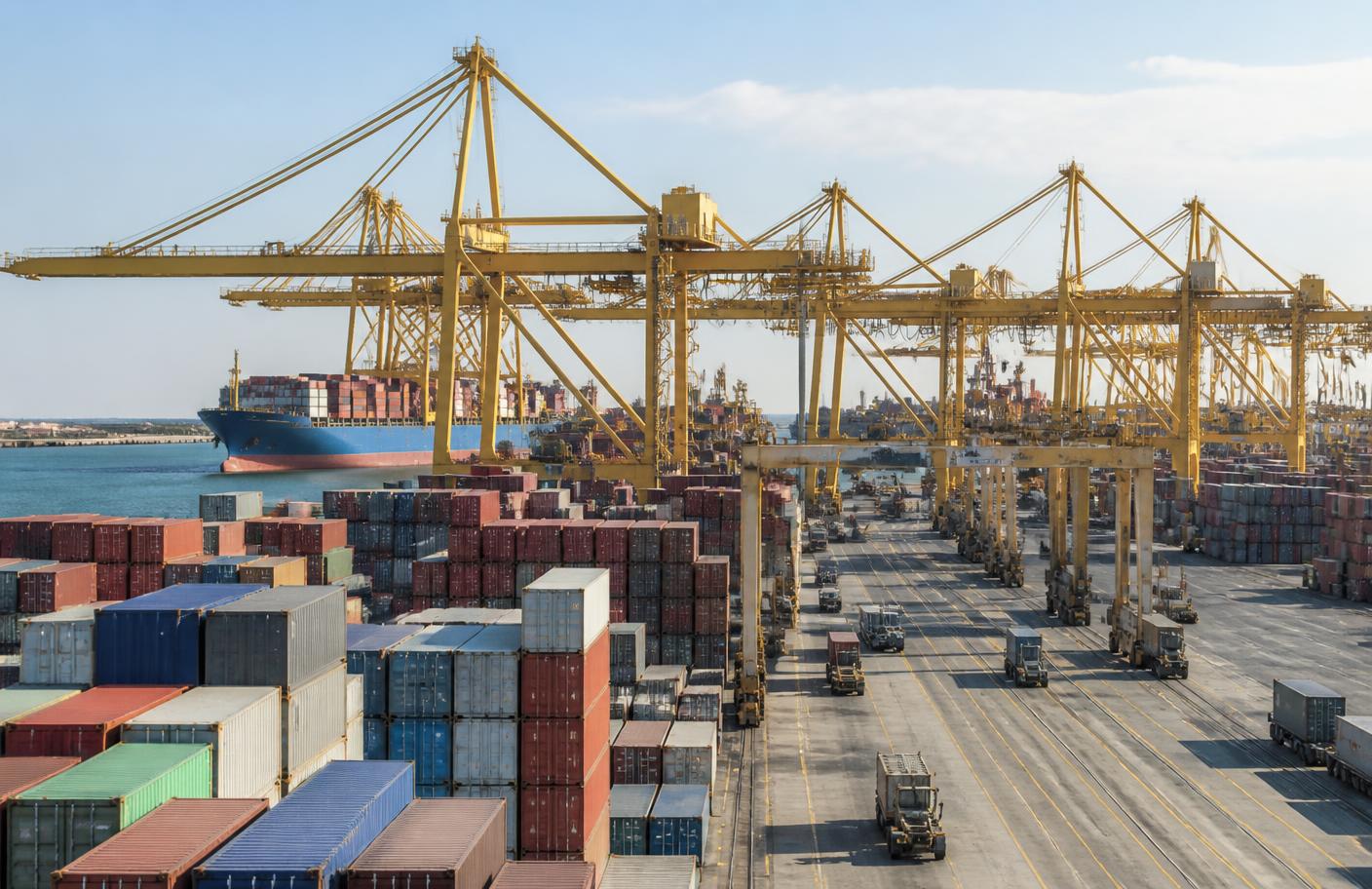
Every route is planned against how the business will actually operate in the UAE.
Questions
Frequently asked
- Is KEZAD a free zone or mainland?
- Both. KEZAD operates free-zone and domestic economic zones, so you choose the regime that fits your customer base rather than being fixed by the location.
- What is KEZAD's relationship to KIZAD?
- KEZAD Group was formed by integrating the former KIZAD industrial zone with ZonesCorp under AD Ports Group. KIZAD is the predecessor name for part of what is now KEZAD.
- Does a free zone mean no VAT?
- No. Designated Zone status applies to goods under conditions, not to services, and not automatically to every free zone. Confirm the current position for your site with the Federal Tax Authority.
- Is worker accommodation available?
- Yes. Employee accommodation is operated across more than forty communities in Abu Dhabi, Al Ain, and Al Dhafra, which for labour-intensive operations is often the deciding factor.
Sources
- KEZAD Group — official website
- KEZAD Group — free zone business facilities
- AD Ports Group — economic cities and free zones
- Federal Tax Authority — amendment to tax treatment of goods in Designated Zones
- Federal Tax Authority — Designated Zones VAT Guide
Regulations, fees, and eligibility can change. Every regulatory statement is re-checked before publication and dated above.
Legal notes and scope
Velarozone provides setup and operational-readiness coordination. This page is general information, not legal, tax, immigration, or banking advice.
This page is general information about UAE business setup, not legal, tax, immigration, or banking advice. Rules, fees, permitted activities, and bank policies can change. Final eligibility depends on your facts and the applicable rules at the time of application.
We prepare and coordinate corporate bank-account applications. We do not open accounts and cannot guarantee approval, a particular bank, or a timeline. Each bank applies its own KYC, AML, and risk assessment.