
Dubai free zone
JAFZA: The Port, the Bond, and the Licence Tiers
The short answer
Jebel Ali Free Zone is DP World's flagship free zone at Jebel Ali Port and the largest customs-bonded zone in the Middle East. It issues four licence types — trading, service, industrial, and logistics — with the trading and service licences structured in tiers that determine how many activities and activity groups you may hold. Premises run from co-working and offices through warehouses, showrooms, and land plots to worker accommodation. It suits import and export at volume, industrial operations, and third-party logistics. It is not built for a desk-based consultancy.
JAFZA is the UAE's original free zone and still the one the others are measured against for physical trade. Its argument is simple: the port, the customs regime, and the land are in one place, and the paperwork chain from vessel to warehouse is integrated.
The corollary is that everything JAFZA does well is expensive and irrelevant if you do not move goods. Choosing it for prestige rather than logistics is the most common way to overpay in Dubai.
At a glance
- Indicative cost
- Priced within your setup plan — every component itemised.
This is for you if
- You import or export at container volume and need bonded storage.
- You are manufacturing, assembling, or processing and need industrial premises.
- You run third-party logistics, freight forwarding, or customs clearing.
- You need land, warehousing, or on-site worker accommodation at scale.
This may not be the right route if
- You are a services business with no goods and no premises requirement.
- You want the lowest-cost route to a UAE licence.
- Your goods move by air and time-to-airport is the binding constraint.
- You need to be close to central Dubai for client meetings.
At a glance
- Indicative cost
- Priced within your setup plan — every component itemised.
Prefer to start in writing? Send the details through the contact form.
Start with a structure assessment
In an initial consultation you receive a plain-language decision summary, a document-preparation list, and the next actions for your situation. Current figures are confirmed within your adviser-reviewed route comparison.
JAFZA in detail
Four licence types, and the tiers inside them
JAFZA issues trading, service, industrial, and logistics licences, and the internal structure is unusually explicit. The trading licence comes in three tiers: the first limited to a set number of activities within a single group, the second allowing more activities across two or more groups, and the third — the general trading tier — allowing unlimited activities across three or more groups. The service licence follows the same logic across two tiers.
The logistics licence is the one that does not exist at most zones. It covers storage, transportation, distribution, sorting, forwarding and clearing, order management, and inventory management, and it is the natural home for freight forwarders and clearing agents who would otherwise be squeezed into a trading or service description that does not fit.
The industrial licence carries a physical condition: production facilities and warehousing must be located inside the free zone, and licensed companies are subject to periodic health, safety, and environment audits. That is a real operating obligation, not a formality.
Customs, the port, and the integrated paperwork chain
JAFZA is described by DP World as the largest customs-bonded zone in the Middle East. The practical consequence is the standard free-zone customs position applied at scale: goods can be brought in from abroad without customs duty, and duty falls due when they leave the zone into the UAE market.
The zone is also wired into Dubai Trade, the platform that connects JAFZA, Jebel Ali Port, Dubai Customs, shipping lines and agents, and importers and exporters. For an operator, that integration — one chain from vessel to warehouse to declaration — is a large part of what the location is actually buying.
Premises, including the ones other zones do not offer
JAFZA's facility list runs well beyond offices: land plots, warehouses, office space, showrooms, retail outlets, co-working and workstations, the Jafza workers' residence, and customised development for operations that do not fit a standard unit.
The workers' residence is worth naming because it solves a problem most zones leave to you. If your operation is labour-intensive, accommodation is a real cost and a real compliance surface, and having it inside the zone changes the arithmetic.
Sectors and entity types
JAFZA clusters its community by sector: logistics, food and agriculture, retail and e-commerce, petrochemicals, automotive and spare parts, electronics and electrical, FMCG, healthcare distribution, manufacturing, and machinery and equipment.
On entity types it is broader than most free zones, registering free zone establishments and free zone companies, public listed companies, branches of existing companies, and offshore companies. The offshore vehicle is a distinct instrument — a holding structure without a trading licence or visa allocation — and should not be confused with the free-zone entity.
JAFZA compared with Dubai South and KEZAD
Against Dubai South, the split is sea versus air with land: JAFZA is at the port with the deeper customs infrastructure, Dubai South is at Al Maktoum International Airport with a purpose-built logistics district and an e-commerce zone. Against KEZAD in Abu Dhabi, the comparison is Dubai's port ecosystem against a lower industrial cost base in another emirate.
If your inbound is containerised and your customers are regional re-export, JAFZA is usually the answer. If your growth is e-commerce fulfilment, Dubai South deserves the closer look.
Before you commit
What to verify with JAFZA specifically
JAFZA-specific checks. The generic free-zone questions are covered in the setup-process guide linked below.
The JAFZA-specific checks worth completing before any payment is made.
Licence type
- Why it matters at JAFZA
- Trading, service, industrial, and logistics are genuinely different
- How it is settled
- Match the licence to how the goods actually move
Trading tier
- Why it matters at JAFZA
- Tiers cap activities and activity groups
- How it is settled
- Choose the tier against your full product range, not your first line
Industrial conditions
- Why it matters at JAFZA
- Production and warehousing must sit inside the zone, with HSE audits
- How it is settled
- Plan for the audit regime before taking industrial premises
Facility type
- Why it matters at JAFZA
- Plots, warehouses, showrooms, and workstations differ materially
- How it is settled
- Confirm the facility with the authority before licensing
Customs position
- Why it matters at JAFZA
- Duty falls due on exit into the UAE market
- How it is settled
- Model landed cost with your freight and customs agent
Entity type
- Why it matters at JAFZA
- Offshore is registered here too and is a different instrument
- How it is settled
- Do not confuse a JAFZA offshore company with a free-zone entity
| Check | Why it matters at JAFZA | How it is settled |
|---|---|---|
| Licence type | Trading, service, industrial, and logistics are genuinely different | Match the licence to how the goods actually move |
| Trading tier | Tiers cap activities and activity groups | Choose the tier against your full product range, not your first line |
| Industrial conditions | Production and warehousing must sit inside the zone, with HSE audits | Plan for the audit regime before taking industrial premises |
| Facility type | Plots, warehouses, showrooms, and workstations differ materially | Confirm the facility with the authority before licensing |
| Customs position | Duty falls due on exit into the UAE market | Model landed cost with your freight and customs agent |
| Entity type | Offshore is registered here too and is a different instrument | Do not confuse a JAFZA offshore company with a free-zone entity |
How setup works
The process is the same wherever you incorporate
Structure options, what an engagement covers, and the stages a licence goes through are common to every free zone. They are set out once, in full, rather than repeated on each zone page.
Read the free-zone setup process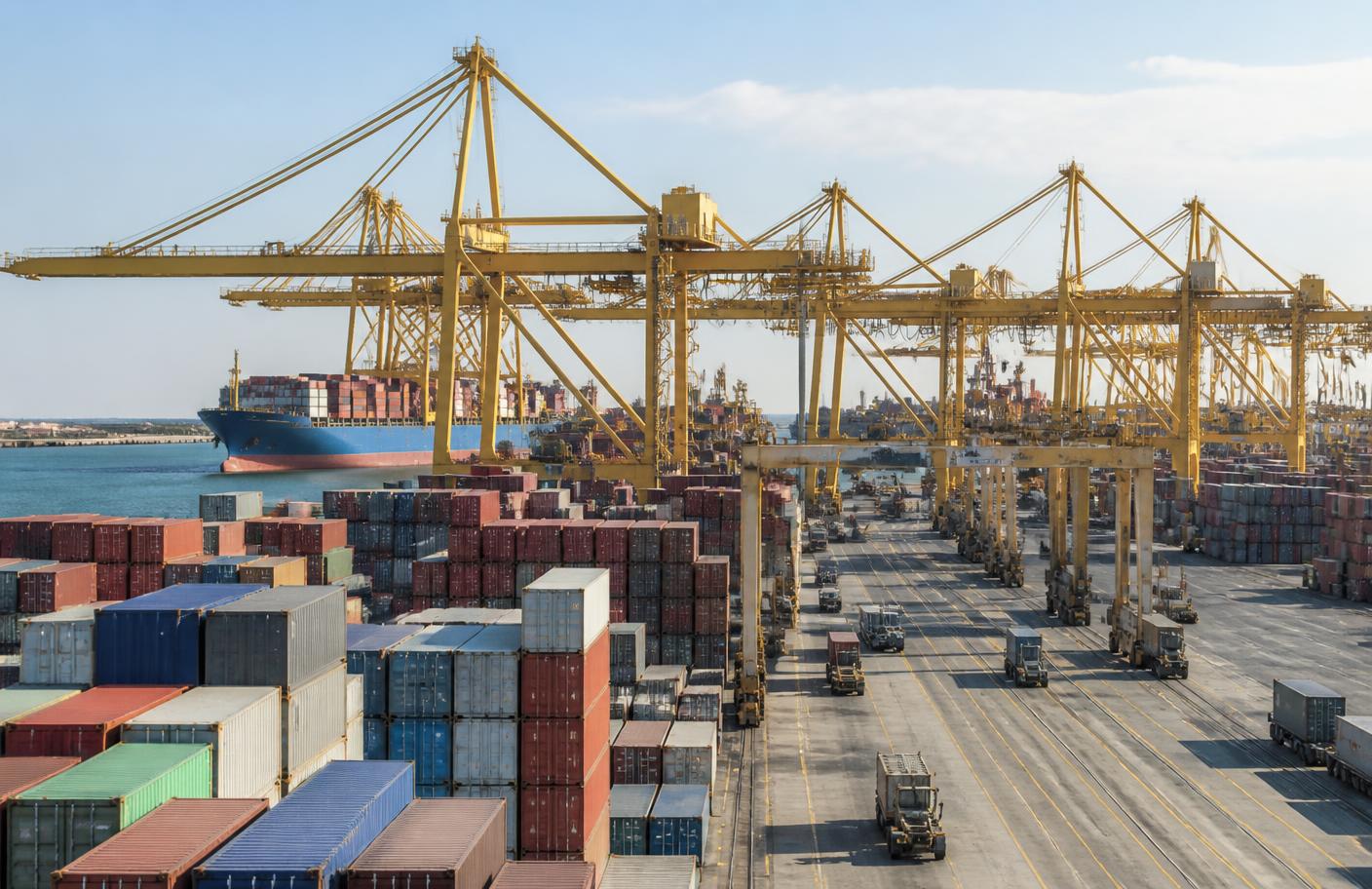
Every route is planned against how the business will actually operate in the UAE.
Questions
Frequently asked
- What licence types does JAFZA issue?
- Four: trading, service, industrial, and logistics. The logistics licence is the notable one, covering storage, transport, distribution, sorting, forwarding and clearing, and inventory management as a category in its own right.
- What is a general trading licence at JAFZA?
- It is the top trading tier, allowing unlimited activities across three or more activity groups. The lower tiers cap the number of activities and the number of groups, so the tier should be chosen against your full product range.
- Does an industrial licence require premises inside JAFZA?
- Yes. Production facilities and warehousing must be located within the free zone, and industrially licensed companies are subject to periodic health, safety, and environment audits by the authority.
- Is a JAFZA offshore company the same as a JAFZA free-zone company?
- No. JAFZA registers offshore companies as well as free-zone entities, but an offshore company is a holding vehicle without a trading licence, premises, or visa allocation.
Sources
- JAFZA — official free-zone authority website
- JAFZA — business licence types
- JAFZA — rules and regulations
- JAFZA — rules and regulations guide
Regulations, fees, and eligibility can change. Every regulatory statement is re-checked before publication and dated above.
Legal notes and scope
Velarozone provides setup and operational-readiness coordination. This page is general information, not legal, tax, immigration, or banking advice.
This page is general information about UAE business setup, not legal, tax, immigration, or banking advice. Rules, fees, permitted activities, and bank policies can change. Final eligibility depends on your facts and the applicable rules at the time of application.
We prepare and coordinate corporate bank-account applications. We do not open accounts and cannot guarantee approval, a particular bank, or a timeline. Each bank applies its own KYC, AML, and risk assessment.