Guide
How to Establish a Port-Terminal, Container-Depot or Inland-Logistics Company in the UAE
Published
The short answer
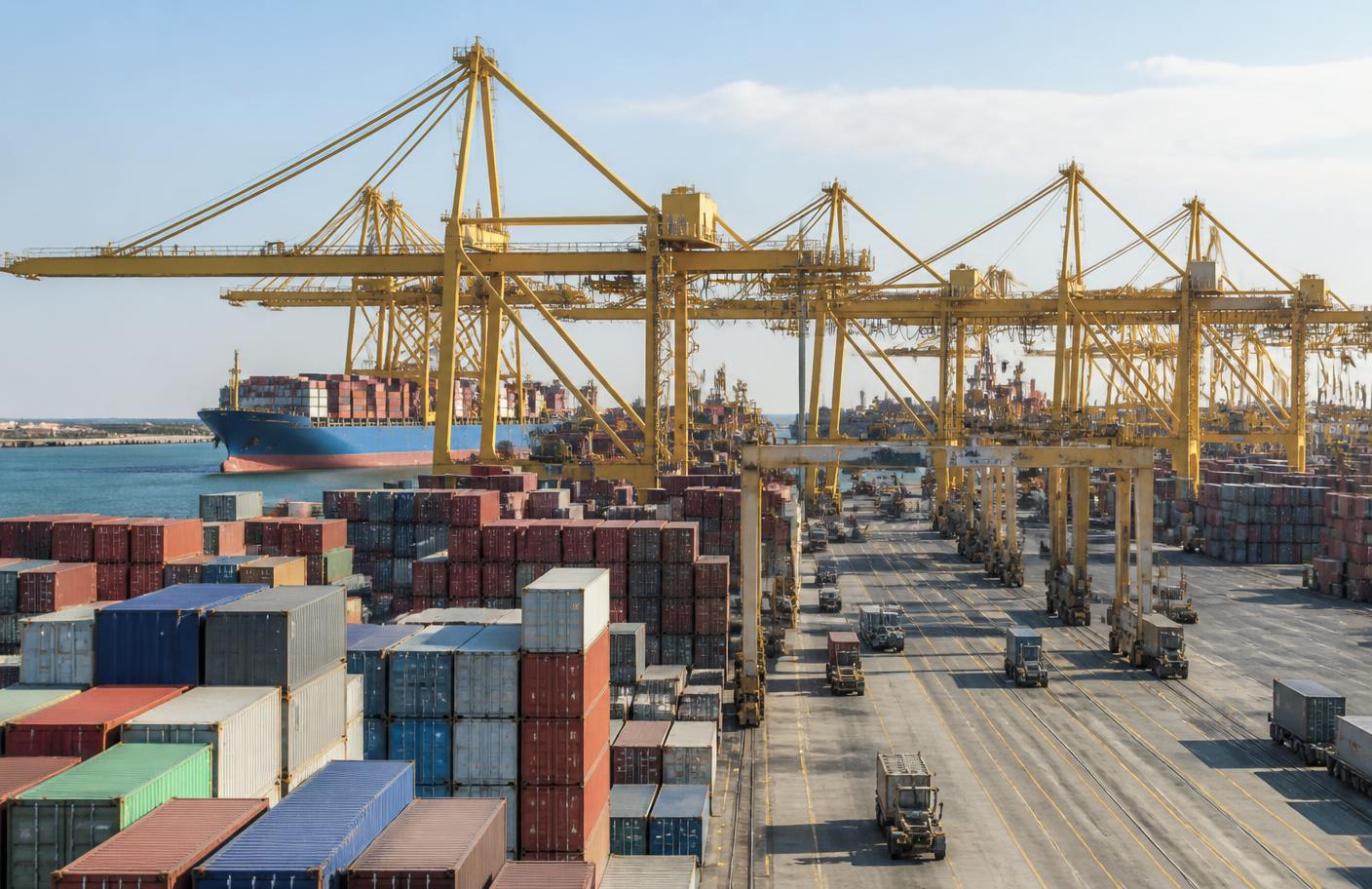
A port terminal, container depot or inland logistics hub is licensed in two separate steps that have to line up: a commercial licence from the relevant economic authority, and a land or berth concession from the port landlord that actually controls who can move cargo through a gate. Customs and port-security clearance sit on top of both. The single factor that most often decides the route is whether the site sits inside a customs-bonded, port-concession area or on ordinary industrial land: that status decides which authority signs off before a container can be stored, bonded or released.
The regulatory perimeter: who decides, and in what order
Federal ports and maritime infrastructure policy sits with the Ministry of Energy and Infrastructure. In practice, the party that decides whether a plot can be used as a terminal or depot is the port authority or free-zone landlord holding that land. The concession or lease, not the commercial licence, fixes the permitted use, the throughput allowed and the term it runs for.
Border and port-security control is a separate layer again. The Federal Authority for Identity, Citizenship, Customs and Port Security (ICP) controls who and what crosses a port gate, and a port-security clearance for the site and its staff sits alongside the commercial licence rather than replacing it. A company can hold a valid trade licence and still be unable to open a gate until that clearance, the land concession and the customs registration are all in place together.
What the customs and port authorities actually require
Cargo that will be stored, transhipped or repaired inside a bonded area needs the site registered as a customs warehouse or depot with the relevant customs authority: Dubai Customs for sites in Dubai. That registration is what lets goods sit under duty suspension instead of being cleared on arrival, and it is granted to the site and its declared storage capacity, not to the trading name on a licence.
Dangerous goods, fuel, and repair-yard waste bring in the Ministry of Climate Change and Environment and the local municipality, who assess handling, storage and disposal before certain cargo or repair activity can start on site. None of these approvals are interchangeable: a bonded-depot registration from customs does not cover dangerous-goods handling, and an environmental permit does not cover port-security clearance.
Banking, insurer and counterparty readiness
Terminal and depot businesses are capital- and liability-heavy in a way most trading companies are not: land or concession commitments, handling equipment and cargo held for shipping lines and customers all sit near the balance sheet before the first invoice is raised. A bank assessing the account wants the land or concession document, the throughput and capex model, the site's customs and security status, and evidence of the customer pipeline that will use it, not a generic business plan.
Where shareholders or the source of capital behind the concession bid are complex, a bank asks for that picture before it asks about the licence. Aligning corporate bank account readiness and source of wealth and funds evidence with the concession paperwork before onboarding starts avoids the account stalling on questions the operating documents already answer.
Ownership, concession eligibility and the roles that must be filled
Port and free-zone landlords typically assess the operator behind a bid, not only the licensed entity: track record, technical capacity, and who is accountable for safety, security and customs compliance on site. A nominated person responsible for site security and for customs and dangerous-goods compliance is commonly expected before a gate opens, separately from general management.
Where the structure includes multiple investors, a holding layer, or a technical operator under a management contract, documenting who actually directs day-to-day decisions, and matching that to the concession bidder's eligibility rules, matters more here than in an ordinary trading company. A regulated and complex ownership setup review before the bid is submitted avoids a structure the registrar accepts but the landlord rejects.
What commonly goes wrong in this sector
- Signing a licence or lease on industrial land without confirming it carries bonded or depot-use status.
- Committing to handling equipment or a repair yard before customer or shipping-line volumes are contracted.
- Mixing customs-bonded and ordinary cargo in the same yard without the segregation the customs registration assumes.
- Treating congestion, cargo-damage and demurrage liability as an insurance afterthought rather than a contract term.
- Comparing licence prices across free zones before the concession, customs and security status of the actual site has been tested.
The gap that causes the most damage is between what a sales pipeline promises ("terminal operator") and what the site and its approvals can actually evidence on day one, which may only be an empty-container yard. Fixing that means changing the offer or completing the missing approval, not adding a disclaimer.
From licence to operating: visas, tax and renewals
Heavy-equipment operators, gate and security staff, and depot management typically need work visas tied to the licensed entity, and Emiratisation obligations administered by the Ministry of Human Resources and Emiratisation apply once headcount reaches the thresholds the ministry sets. Once trading, the company registers for corporate tax with the Federal Tax Authority like any other UAE company. Bonded status changes the customs-duty treatment of the goods stored, not the company's own tax registration.
Concession terms, customs-depot registration and port-security clearance are each renewed on their own cycle, separate from the commercial licence renewal. A missed concession or customs renewal can stop a gate operating even while the trade licence itself is still valid, so the renewal calendar needs to track all three, not just the licence.
Cost here is built in layers rather than one headline figure (land or concession, approvals, equipment and working capital, people, and recurring renewals), and Velarozone's own fee for the advisory and setup work is itemised in the engagement letter rather than published; see how Velarozone works for how that engagement is structured.